
By Amirhossein Aldavood (R.Ac)
Reading time: 4–5 minutes
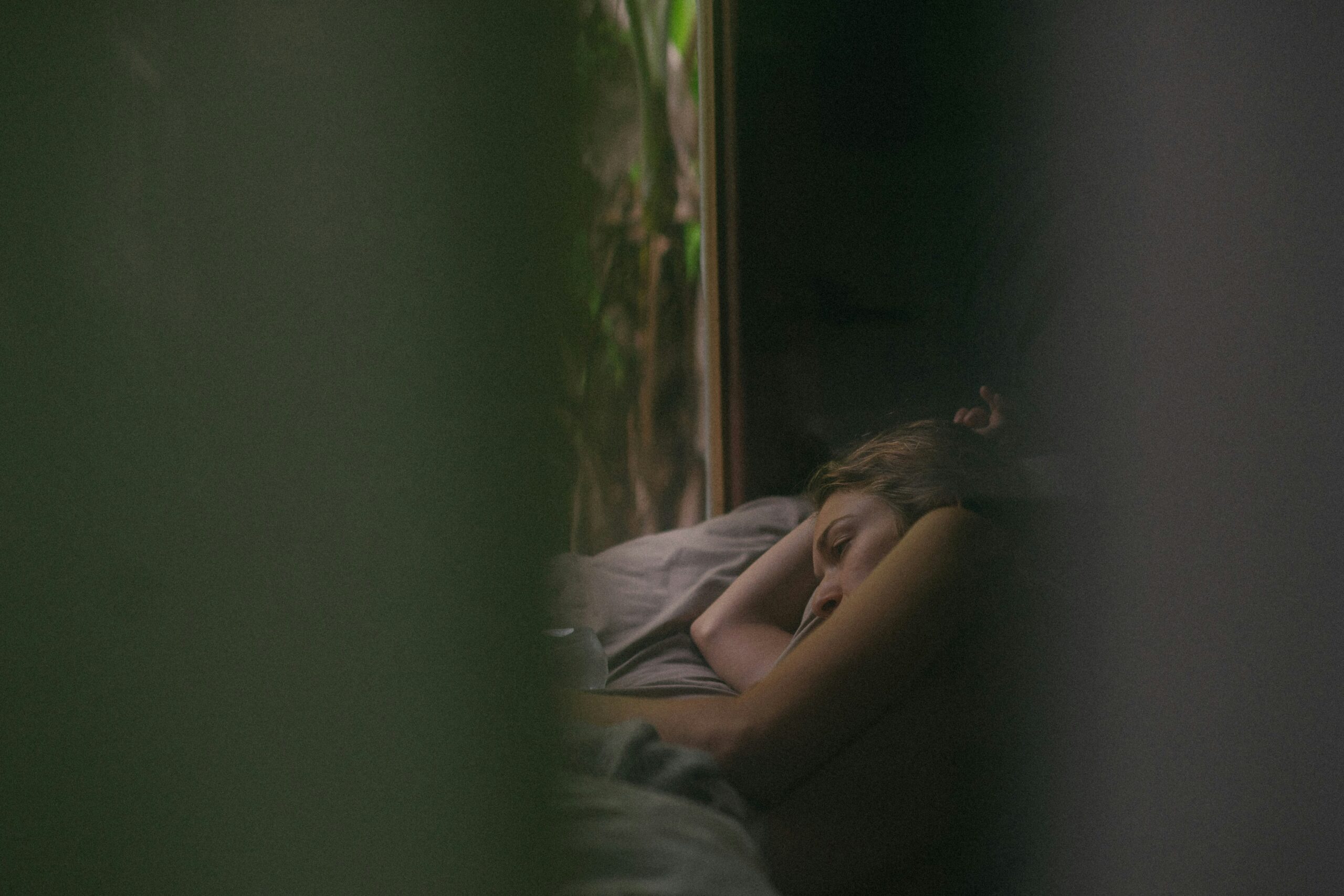
There are nights when I feel completely exhausted…but the moment I lie down, my mind suddenly becomes more awake.
Thoughts start moving.
Random memories appear.
Conversations replay themselves.
Tomorrow’s problems suddenly feel urgent.
And the harder I try to sleep, the more impossible sleep starts feeling.
For many people, this becomes a quiet nightly battle nobody else really sees.
The body is tired.
But something inside never fully lets go.
ABSTRACT
Difficulty falling asleep is often more than simply “not being tired enough.” Stress, emotional overload, nervous system hyperactivation, and internal tension can make it difficult for the body and mind to fully settle into restorative sleep. This article explores the lived experience of struggling to fall asleep through both modern and holistic perspectives.
When Nighttime Becomes Mentally Loud
One of the strangest parts of sleep difficulty is how quiet nights can suddenly feel mentally overwhelming.
During the day, people stay busy.
Distracted.
Occupied.
But nighttime removes many of those distractions.
And suddenly, thoughts become louder.
“I should have done that differently.”
“What if tomorrow goes badly?”
“Why can’t I stop thinking?”
For some people, nighttime becomes the only moment when the nervous system finally slows down enough for buried stress, fear, pressure, or emotional overload to surface.
Being Tired Is Not Always Enough for Sleep
Many people assume sleep should happen automatically once the body becomes exhausted.
But sleep is not simply physical tiredness.
Healthy sleep requires the nervous system to feel safe enough to settle.
And sometimes the body feels exhausted while the system itself still feels alert.
This is why people often say things like:
- “I’m exhausted, but my brain won’t stop.”
- “The moment I lie down, I become more awake.”
- “I feel sleepy all day, but fully awake at night.”
From a modern neuroscience perspective, chronic stress and hyperactivation can keep the nervous system stuck in a more alert state.
Traditional Chinese Medicine has historically observed similar patterns through a different language of internal imbalance, overstimulation, and difficulty fully settling the mind and body into restoration.
The Hardest Part Is Often the Frustration
Sleep difficulty is not only physically exhausting.
It can also become emotionally frustrating.
Especially when it repeats night after night.
People start checking the clock.
Calculating how many hours remain before morning.
Trying harder to force sleep.
And ironically, the pressure to sleep itself often creates even more internal tension.
Over time, many people stop looking forward to bedtime.
Because bedtime no longer feels restful.
It feels stressful.
Sleep Problems Often Affect More Than the Night
Even though sleep problems happen at night, their effects slowly spread into the rest of life.
Energy changes.
Patience becomes thinner.
Emotional resilience decreases.
Small stressors feel bigger.
And after enough nights of poor sleep, many people quietly begin feeling disconnected from calm itself.
This is one reason sleep problems are rarely only about the night alone.
The nervous system carries them into the daytime too.
Next Article…
I Fall Asleep… But I Never Stay Asleep
For some people, falling asleep is only the beginning of the struggle.
The body may eventually fall asleep—but still fail to remain deeply settled and restorative throughout the night.
Photo by Jordan Bauer on Unsplash