
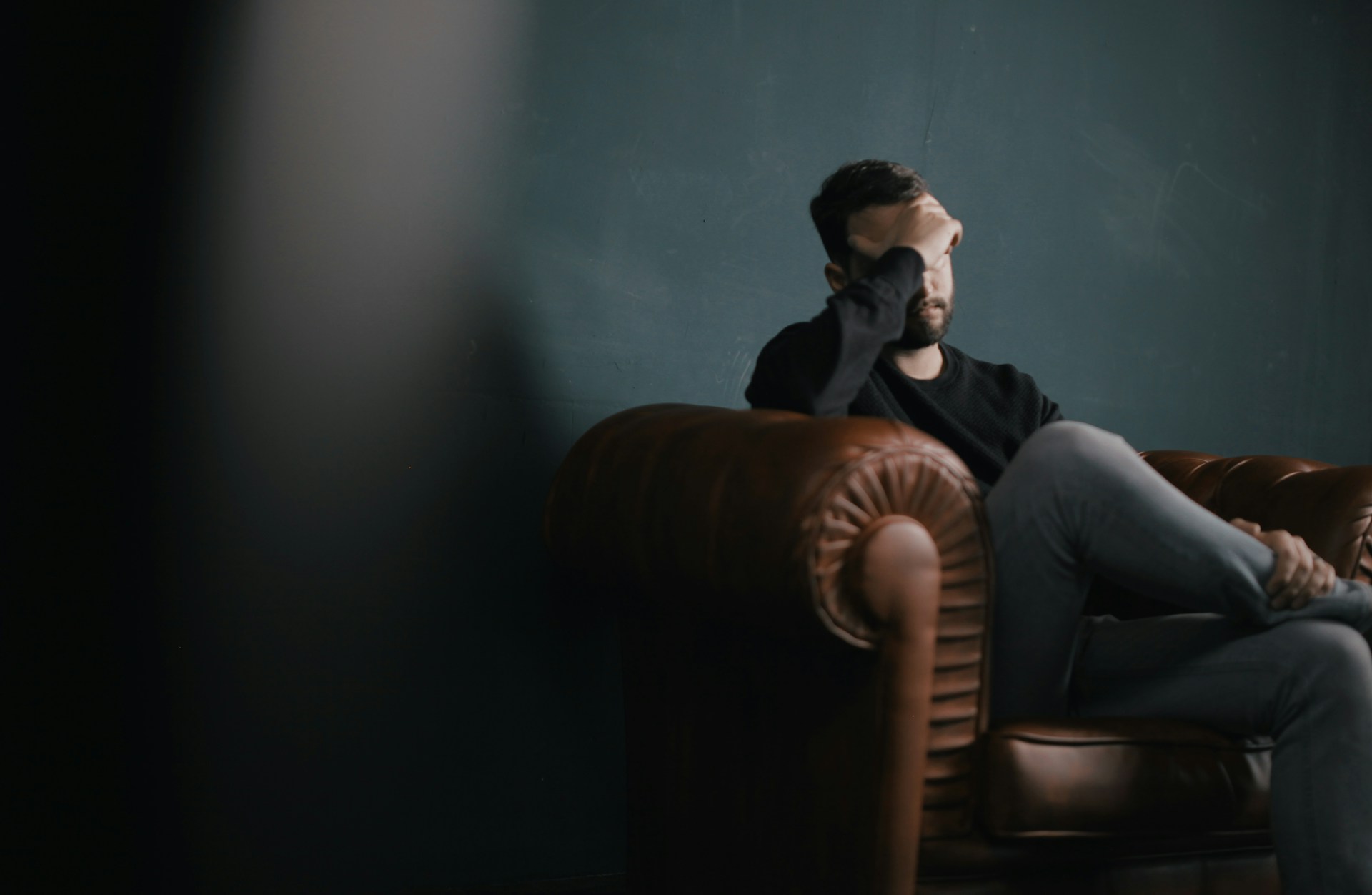
By Amirhossein Aldavood (R.Ac)
Reading time: 4–5 minutes
At first, you think you are just stressed.
Busy.
Overwhelmed.
Maybe even simply “thinking too much.”
But over time, something deeper begins happening.
Your body never fully relaxes.
Your thoughts never completely slow down.
Even during moments of rest, something inside still feels alert.
As if your system is constantly waiting for the next problem, the next pressure, the next emotional impact.
And eventually, exhaustion begins appearing everywhere.
Not only emotionally.
Physically too.
ABSTRACT
Long-term anxiety and emotional hypervigilance can gradually overwhelm the nervous system, affecting sleep, recovery, energy, emotional regulation, and physical well-being. This article explores how chronic internal activation may slowly lead toward emotional exhaustion and nervous system fatigue.
Living in Constant Internal Tension
Many people living with chronic anxiety become so familiar with tension that they stop noticing it.
The shoulders remain tight.
The jaw stays clenched.
Breathing becomes shallow.
Sleep never feels deep enough.
And even when life becomes temporarily quieter, the nervous system may still struggle to believe it is finally safe to relax.
This constant state of internal activation can become deeply exhausting over time.
When the Body Cannot Fully Switch Off
The human nervous system was never designed to remain constantly alert.
Stress responses are meant to activate temporarily and then settle again.
But emotional overload, prolonged uncertainty, unresolved stress, pressure, fear, trauma, and chronic overthinking can gradually keep the system activated for too long.
At first, people push through it.
But eventually, the body begins showing signs that it is struggling to recover.
Rest feels incomplete.
Energy disappears faster.
Patience becomes thinner.
Small problems feel emotionally overwhelming.
And many people quietly begin functioning from exhaustion instead of true recovery.
Anxiety Can Become Physical
One of the most misunderstood aspects of anxiety is how physical it can become.
Many people experience:
- muscle tension
- headaches
- digestive discomfort
- chest tightness
- fatigue
- emotional sensitivity
- restlessness
- difficulty sleeping
- constant overstimulation
Modern neuroscience increasingly recognizes the close relationship between emotional stress and physical regulation.
Traditional Chinese Medicine has understood this connection holistically for centuries.
From a TCM perspective, long-term emotional strain may gradually disrupt the body’s balance, recovery, circulation, and nervous system regulation over time.
This is one reason emotional suffering often becomes physically exhausting too.
The Exhaustion People Rarely Talk About
One of the quietest forms of suffering is looking “fine” while internally feeling stretched beyond capacity.
Many people continue working, caring for family, responding to responsibilities, and appearing functional externally while emotionally feeling completely drained inside.
And eventually, some people stop feeling simply anxious.
They begin feeling emotionally empty.
Disconnected.
Numb.
As if their nervous system has been overloaded for too long without enough opportunity to truly recover.
Next article…
Full of Nothing… Feeling Nothing… Everything Feels Gray
For some people, chronic anxiety does not end in panic.
It ends in exhaustion.
And over time, emotional exhaustion can slowly begin disconnecting people from themselves, their emotions, and even their sense of meaning in daily life.
Photo by Nik Shuliahin 💛💙 on Unsplash
Leave a Reply